





Interview by Catherine Larner for Suffolk Magazine
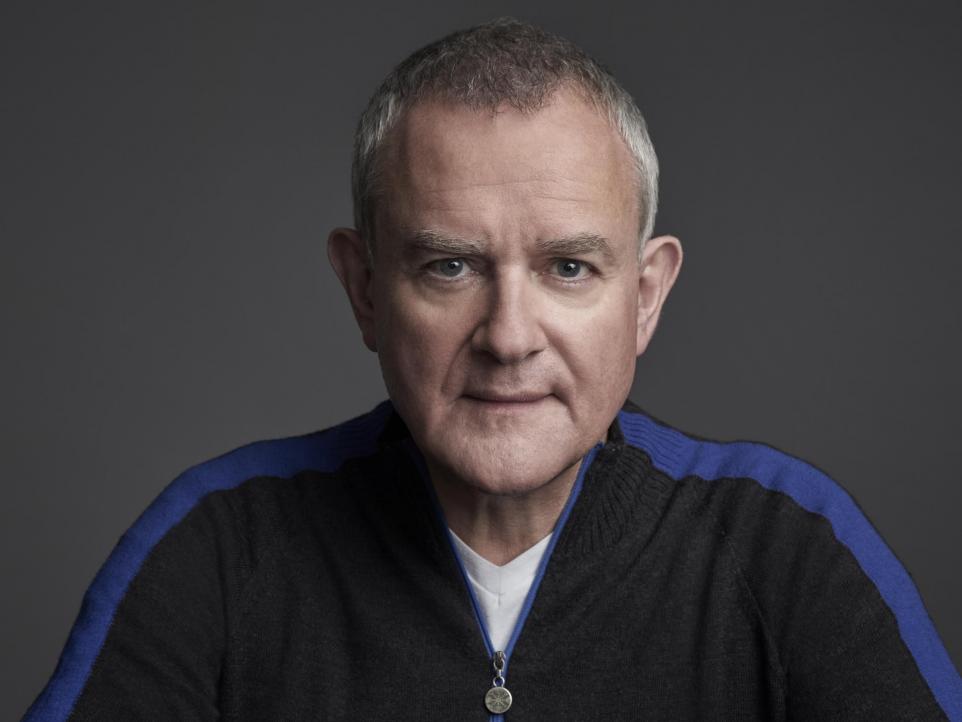
Hugh Bonneville is one of Britain’s most-loved screen actors. But theatre has always been his first love – and it’s why he’s championing new writers and performers at Halesworth’s INK Festival
We may know him best as Mr Brown, Ian Fletcher and the Earl of Grantham through his award-winning, much-loved film and TV roles, but before Paddington, W1A and Downton Abbey, Hugh Bonneville was on stage, fulfilling a passion and compulsion to act.
‘I’m very much a stage actor – that is what I wanted to be,’ he says. ‘So I spent many years doing Rep (repertory theatre) and at the National Theatre and the Royal Shakespeare Company – classical theatre, mainly.
I never thought in a million years I’d do anything on screen. I thought that was a foreign land.’
Recognising that the opportunities which were available to him are not present for young actors, writers and directors in the same way today, he is eager to support avenues encouraging emerging talent. And that’s one reason why he’s coming to the INK Festival in Halesworth next month.
The other reason is that he had no choice.
‘My boss told me I had to be there,’ he says with no hint of irony or a glint in his eye. ‘I have to do what he says.’ He’s referring to Paul Schlesinger, the executive producer of Hugh’s latest project for the BBC, Twenty Twenty Six, and a supporter of INK, Suffolk’s acclaimed festival of short plays.
The ‘mockumentary’ will be screened later this year, but it’s already attracting great excitement. The successor to W1A and Twenty Twelve, this time Hugh’s character, Ian Fletcher, is director of integrity for ‘a worldwide football competition’.
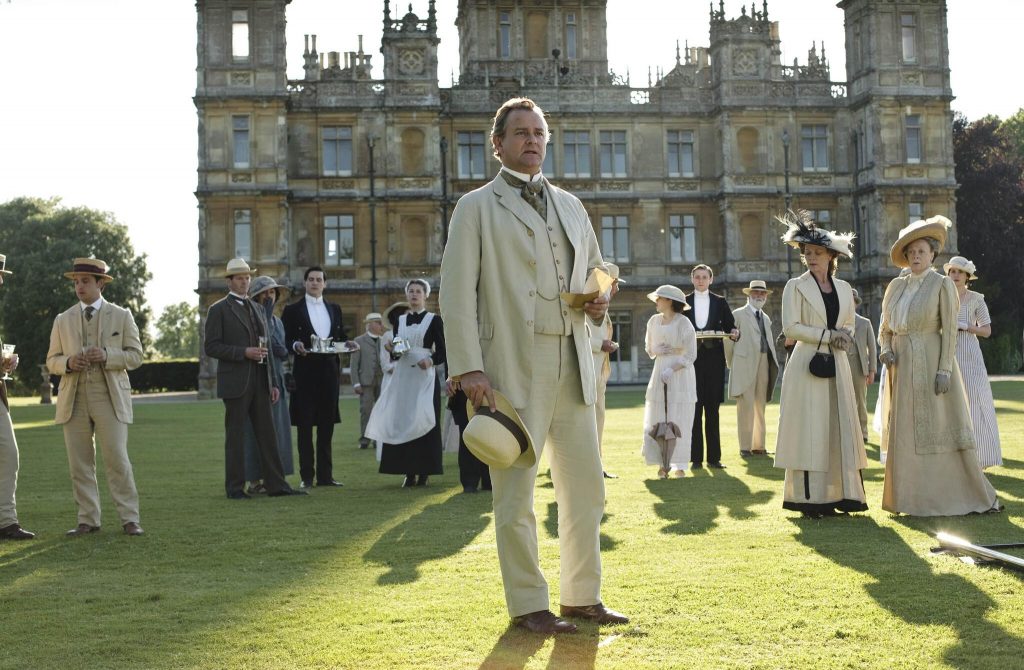
Hugh as Robert Crawley, Earl of Grantham in Downton Abbey. Photo: ITV
Though Hugh claims he’s on a three-line whip to attend INK, the festival’s aims and achievements are clearly something he considers important. So he’ll be making the trip to Suffolk while in the middle of a run on the West End stage and shooting a film at the same time. ‘It’s a bit mad,’ he concedes of his schedule. ‘I might be quite tired.’
If anyone can pull it off, he can, though it does bring to mind an episode early in his acting career, related in his recent autobiography, Playing Under the Piano. Hugh was at the National Theatre appearing on some nights as a flamenco-dancing villager in the Cottesloe Theatre and other nights at the Lyttelton Theatre as a member of the crowd. Ambitious and under-utilised in these minor roles, he also volunteered to join the army in Antony and Cleopatra at the Olivier Theatre. But he missed the rehearsal, didn’t know the moves and found himself on stage in the opposite direction to the rest of the troop. He very slowly turned round, just like Mr Brown in one of his scrapes with Paddington.
The book is a brilliantly written account of his career, from his big break as Third Shepherd in the school nativity play to ‘having a conversation about your weight’ for his role as a stockbroker in Notting Hill (Hugh was too slim).
And he’s sure to give us more behind-the-scenes tales from his life and career when he speaks at the INK Festival at Halesworth. But, just as in the book, Hugh is also keen to share his views on the state of the theatre today, and its value and importance for the future. Indeed, when he is much in demand on screen, why does he choose to take to the stage again?
‘Theatre, or live performance of any sort, has a premium, certainly an emotional, spiritual and aesthetic premium,’ he says. ‘Because it’s real, it’s not fake. Everything you see online, you think: “Is that true? Has that interview been manipulated?” You can’t beat being in a theatre with a couple of hundred other people experiencing a story being told.
‘I took a friend to a production of Romeo and Juliet, and Romeo fluffed a line. My friend thought it was amazing – he fluffed his line! It was real! It was a sort of revelation, that theatre is happening in the present moment. And that is why I think performers enjoy it so much? you can’t be edited out of the final version. And, as Judi Dench says, “tomorrow night, you can get it right.”’
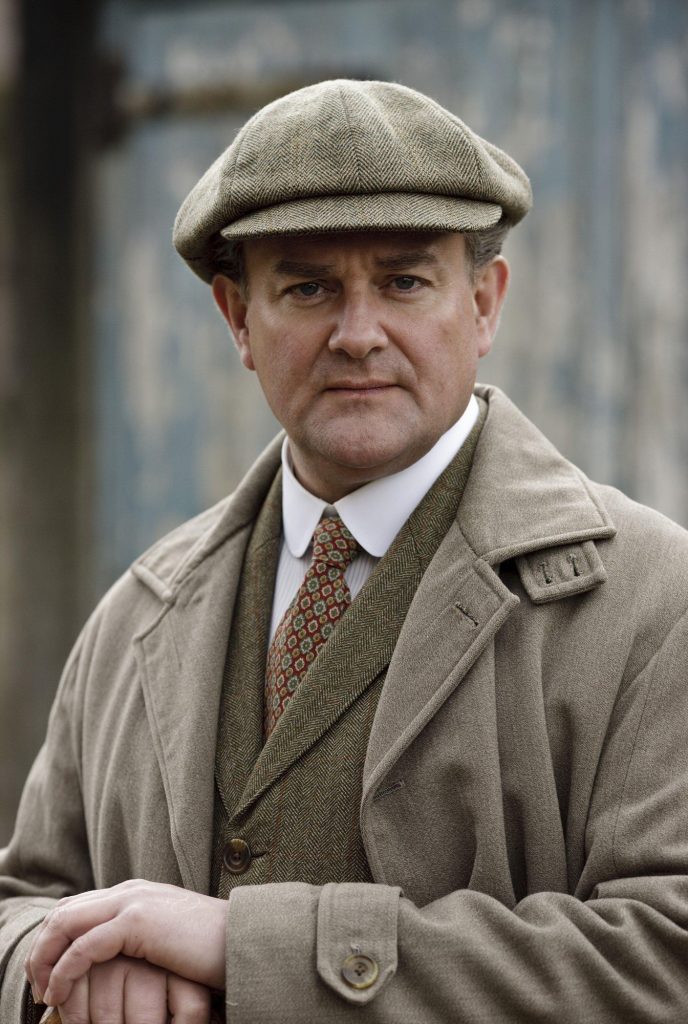
He has played many well-loved characters on stage and screen. Photo: ITV
We’re unlikely to hear any fluffed lines when Hugh plays CS Lewis in Shadowlands, running till May at the Aldwych. It’s a role he first performed in Chichester in 2019 and he’s clearly relishing the opportunity.
‘It’s an emotionally charged play. The audience come with you on the journey and participate in it. Whether it’s a big laugh or a pin-drop silence, the experience in a theatre is unique, which is why it remains potent and effective.’
And it’s why we should encourage new writers, new performers and new interpretations, he says. ‘Plays that shock and illuminate for one generation, may not shock and illuminate the next. As always, Shakespeare puts it best when he said in Hamlet that we should hold up the mirror to see who we are and why we are here.’
Though it’s something we should all explore, at any age, Hugh is particularly energised about helping young people appreciate the arts.
‘I would like the arts back in mainstream education,’ he says. ‘But I don’t mean exams. I mean the experience of singing in a choir, picking up a paintbrush, putting on a pair of dance shoes, making up a story in an improvisation class, self-expression. All these transferrable skills that the arts give you for any walk of life: being able to look someone in the eye and communicate at an interview.
‘I grew up with the National Youth Theatre,’ he says. ‘It changed my life so I’m very passionate about supporting young talent that doesn’t perhaps have access. The number of times I’ve heard it said that the arts aren’t for me because they’re for other people. It’s just not the case.
‘Every time we go to the pub and tell a joke, that’s theatre. If a child comes back from school and tells Mum and Dad about his day, he tells the funniest bits, or edits the most annoying bits. We all tell stories every single day. We filter out the stuff that we don’t think is interesting and bring out the highlights. That’s the basis of playwriting, of theatre, of performance, of being human, frankly.’
So he’ll be delighted to see all the good work being done by INK this year, but despite developing screenplays, and this year publishing his second children’s book, Hugh hasn’t been tempted to write a play himself.
‘I am in such awe of playwrights that I don’t think I dare to dip my toe into it,’ he says. ‘Maybe because I’ve worked on so many good plays. Playwriting I hold absolutely aloft and as the greatest thing.’
INK Festival 2026, Halesworth, takes place April 16-19. Tickets: inkfestival.org